
What Is TURP Surgery and How Does It Help Prostate Enlargement?
Table of Contents
ToggleAn ultimate guide on ‘What Is TURP Surgery and How Does It Help Prostate Enlargement?’ – from the desk of Dr. Debmalya Gangopadhyay, Senior Consultant Urologist, Apollo Multispeciality Hospitals, Kolkata, India
Introduction
Frequent urination, a weak urine stream, difficulty emptying the bladder, or waking up several times at night to pass urine are common signs of an enlarged prostate. These symptoms are often caused by Benign Prostatic Hyperplasia (BPH), a condition that affects many men as they grow older. While medicines can help in the early stages, some patients may need TURP Surgery to get long-lasting relief and improve their quality of life.
TURP Surgery (Transurethral Resection of the Prostate) is one of the most trusted and effective surgical treatments for men with moderate to severe prostate enlargement. It is a minimally invasive procedure that removes the excess prostate tissue blocking the flow of urine, helping patients urinate more comfortably and reducing troublesome urinary symptoms.
If you are experiencing persistent urinary problems, consulting an experienced prostate doctor in Kolkata or a qualified urologist in Kolkata is the first step towards proper diagnosis and treatment. The Best Urologist in Kolkata will carefully assess your condition and recommend the most suitable option, whether it is medication, lifestyle changes, or advanced Prostatic Enlargement (BPH) Treatment in Kolkata, including TURP Surgery.
In this blog, you will learn what TURP surgery is, how it works, who may need it, its benefits, recovery process, and why it remains one of the most effective treatments for prostate enlargement.
What Is Prostate Enlargement (BPH)?
The prostate is a small gland located below the bladder and around the urethra, the tube that carries urine out of the body. As men grow older, the prostate naturally becomes larger.
This condition is known as Benign Prostatic Hyperplasia (BPH) or benign prostate enlargement. It is not cancer and does not increase the risk of prostate cancer, but it can significantly affect urination.
When the prostate enlarges, it presses against the urethra and blocks the normal flow of urine. This causes several uncomfortable urinary symptoms.
Common Symptoms of Enlarged Prostate
Some of the most common signs include:
- Frequent urination
- Waking up several times at night to urinate
- Difficulty starting urination
- Weak urine stream
- Interrupted urine flow
- Feeling that the bladder is not completely empty
- Dribbling after urination
- Sudden urge to urinate
- Pain or discomfort while passing urine in some cases
These symptoms usually become worse over time if left untreated.
When Is TURP Surgery Needed?
Doctors usually recommend medicines as the first line of treatment. However, surgery may become necessary when:
- Medicines no longer provide relief
- Urination becomes extremely difficult
- The bladder cannot empty completely
- Repeated urinary tract infections occur
- Blood appears in urine because of BPH
- Bladder stones develop
- Kidney function starts getting affected
- Acute urinary retention occurs and requires repeated catheterization
TURP is considered the gold standard surgical treatment for moderate to severe prostate enlargement.
What Is TURP Surgery?
TURP stands for Transurethral Resection of the Prostate.
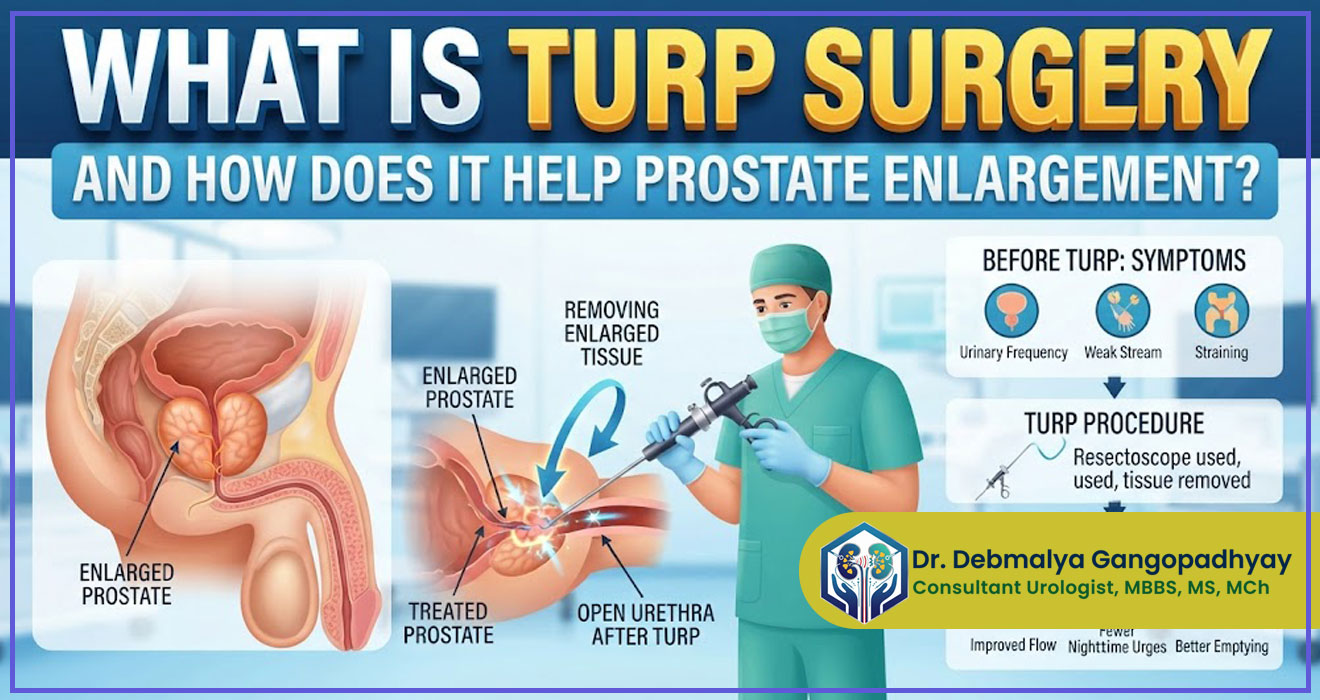
It is a minimally invasive surgical procedure performed without making any cuts on the abdomen. Instead, the surgeon inserts a thin instrument called a resectoscope through the urethra.
The biggest advantage of TURP is that it requires no external cuts or incisions on your body.
Instead of cutting through the abdomen, an expert surgeon accesses the prostate internally through the natural urinary channel. Using a specialized medical instrument called a resectoscope (a thin, lighted tube equipped with a wire loop and camera), the surgeon precisely trims away excess prostate tissue layer by layer to open up the urinary pathway.
Why Is TURP Done? (Indications & Symptoms)
A doctor usually recommends TURP when BPH symptoms become moderate to severe, or when medications stop working effectively.
If you consult an experienced Urologist in Kolkata, they will evaluate your urinary health to see if TURP is right for you. Common indications include:
- Frequent Urination: Needing to pass urine every 1–2 hours during the day.
- Nocturia: Waking up multiple times throughout the night to urinate, causing sleep deprivation.
- Weak or Interrupted Stream: A urine stream that hesitates, dribbles, or starts and stops.
- Incomplete Bladder Emptying: Sensation that the bladder is still half-full after urinating.
- Acute Urinary Retention: Suddenly being completely unable to pass urine, requiring an emergency catheter.
- Recurrent UTIs or Bladder Stones: Urine sitting stagnant in the bladder can trigger repeated urinary tract infections or form painful bladder stones.
- Kidney Damage: Severe blockage can cause urine to back up into the kidneys, risking long-term renal failure.
How Does TURP Help Prostate Enlargement?
Transurethral Resection of the Prostate (TURP) is widely considered the gold-standard surgical treatment for Benign Prostatic Hyperplasia (BPH), or prostate enlargement.
As a man ages, the prostate gland often grows larger, squeezing the urethra (the tube carrying urine from the bladder out of the body) like a tight clamp. This restriction causes troublesome urinary issues such as weak urine flow, frequent nighttime urination, and the inability to fully empty the bladder.
TURP solves this problem by directly removing the blockage without any external skin cuts.
Key Ways TURP Provides Relief
- Clears the Blocked Pathway: During the procedure, a surgeon inserts a thin, lighted instrument called a resectoscope through the natural urinary channel. Using a tiny heated wire loop, the surgeon trims away the excess, overgrown prostate tissue layer by layer.
- Restores Normal Urine Flow: By carving out a wide, clear path through the prostate, urine can once again flow smoothly and effortlessly out of the bladder.
- Protects the Bladder & Kidneys: When urine sits stagnant in the bladder for too long, it increases the risk of urinary tract infections (UTIs), bladder stones, and kidney damage. Clearing the obstruction allows the bladder to empty completely, protecting long-term organ health.
- Eliminates Constant Urgency & Sleepless Nights: Once pressure on the urethra is relieved, the frequent urge to visit the bathroom—especially during the night—drops significantly, restoring restful sleep and everyday confidence.
By physically opening the restricted channel, TURP delivers immediate, long-lasting relief from severe BPH symptoms when medications are no longer enough. Many patients notice significant improvement within a few weeks after surgery.
How Is TURP Surgery Performed? – Step-by-step guide
Tests Done Before TURP Surgery
Before recommending surgery, your doctor may advise several investigations.
These may include:
Physical Examination
Including a digital rectal examination (DRE).
Urine Test
To check for infection or blood.
Blood Tests
Including kidney function and PSA (Prostate-Specific Antigen) if needed.
Ultrasound
To assess prostate size and bladder condition.
Uroflowmetry
Measures the speed of urine flow.
Post-Void Residual Urine Test
Checks how much urine remains in the bladder after urination.
Cystoscopy
In selected patients, the doctor may examine the inside of the bladder and urethra.
How Is TURP Surgery Performed?
The procedure generally follows these steps:
Anaesthesia
The patient receives spinal or general anaesthesia.
Insertion of the Resectoscope
The surgeon passes the instrument through the urethra.
Removal of Extra Prostate Tissue
An electrical loop carefully removes the enlarged tissue blocking urine flow.
Tissue Removal
The removed tissue is flushed into the bladder and collected for examination.
Catheter Placement
A urinary catheter is usually placed to help drain urine and wash out any blood.
Hospital Stay After TURP
Most patients remain in the hospital for one to three days.
The catheter is usually removed after one or two days once the urine becomes clear.
Patients are encouraged to walk as soon as possible after surgery to aid recovery.
Recovery After TURP Surgery
Recovery differs from person to person.
Most patients can:
- Resume light activities within one week
- Return to office work in two to three weeks
- Avoid heavy lifting for four to six weeks
- Drink plenty of water
- Take medicines exactly as prescribed
Your doctor will advise when you can resume exercise and sexual activity.
Benefits of TURP Surgery
TURP has been performed successfully for many decades and continues to be one of the most reliable treatments for BPH.
Some important benefits include:
Better Urine Flow
Patients usually notice stronger urine flow.
Relief from Frequent Urination
The need to visit the toilet repeatedly often decreases.
Better Sleep
Many patients experience fewer nighttime bathroom visits.
Improved Bladder Emptying
The bladder empties more completely.
Better Quality of Life
Patients can travel, work, and participate in daily activities with greater comfort.
Long-Term Results
Many men enjoy lasting symptom relief for several years.
Possible Risks of TURP Surgery
Like any surgical procedure, TURP has some risks, although serious complications are uncommon when performed by an experienced urologist.
Possible risks include:
- Temporary bleeding
- Urinary tract infection
- Difficulty urinating for a short period
- Temporary burning during urination
- Retrograde ejaculation
- Rare urinary incontinence
- Rare erectile dysfunction
- Need for future treatment in some patients
Your doctor will explain these risks before surgery.
TURP vs Laser Prostate Surgery
Today, laser procedures are also available for treating an enlarged prostate.
TURP
- Well-established procedure
- Excellent long-term results
- Suitable for many patients
Laser Surgery
- Less bleeding
- Faster catheter removal in selected patients
- Helpful for patients taking blood thinners in certain situations
Your urologist will recommend the most appropriate treatment based on your prostate size, age, medical history, and overall health.
Lifestyle Tips After TURP
To support recovery:
- Drink enough water
- Avoid constipation
- Eat a fibre-rich diet
- Avoid heavy lifting during recovery
- Reduce alcohol intake
- Limit caffeine
- Attend follow-up appointments
- Complete all prescribed medicines
These simple measures help ensure a smooth recovery.
Can Prostate Enlargement Be Prevented?
Although ageing cannot be prevented, healthy habits may support overall prostate health.
These include:
- Maintaining a healthy weight
- Regular physical activity
- Eating more fruits and vegetables
- Staying hydrated
- Avoiding smoking
- Managing diabetes and blood pressure
- Going for regular medical check-ups
Early diagnosis often allows treatment before complications develop.
When Should You Consult a Urologist?
Do not ignore urinary symptoms.
You should see a urologist if you experience:
- Frequent urination
- Difficulty passing urine
- Weak urine stream
- Blood in urine
- Pain while urinating
- Repeated urinary infections
- Sudden inability to urinate
Prompt evaluation helps prevent complications and improves treatment outcomes.
Choosing the Right Urologist
The success of TURP surgery depends not only on the procedure but also on proper diagnosis, careful patient selection, and experienced surgical care.
When choosing a specialist, look for:
- Extensive experience in treating prostate diseases
- Expertise in minimally invasive and endoscopic urology
- Modern diagnostic facilities
- Comprehensive pre-operative assessment
- Personalised treatment planning
- Good post-operative follow-up care
Consult a qualified and experienced specialist who offers advanced care for enlarged prostate and other urological conditions. The Best Urologist in Kolkata will recommend the most suitable treatment based on your symptoms, prostate size, and overall health rather than suggesting surgery for every patient.
Why Early Treatment Matters
Many men delay seeking treatment because they feel embarrassed or assume urinary problems are a normal part of ageing. However, untreated BPH can lead to complications such as bladder damage, recurrent infections, bladder stones, urinary retention, and even kidney problems.
Seeking timely Prostatic Enlargement (BPH) Treatment in Kolkata allows your doctor to manage the condition before these complications occur. Whether treatment involves medication, lifestyle changes, TURP, or another minimally invasive procedure, early intervention often leads to better outcomes and a faster return to normal life.
Conclusion
Benign Prostatic Hyperplasia is a common condition, but it should never be ignored. Persistent urinary symptoms can affect your sleep, work, travel, and overall quality of life. TURP surgery has helped millions of men worldwide by safely removing the enlarged prostate tissue that blocks urine flow, providing significant and long-lasting relief.
If you are experiencing symptoms of prostate enlargement, do not wait for the condition to worsen. Consult an experienced Prostate doctor in Kolkata for a complete evaluation and personalized treatment plan. Whether you need medication, lifestyle guidance, or advanced Prostatic Enlargement (BPH) Treatment in Kolkata, the Best Urologist in Kolkata can help you choose the safest and most effective option for lasting urinary health.
Frequently Asked Questions (FAQs) on TURP Surgery
1. Is TURP surgery painful?
No. The surgery is performed under spinal or general anaesthesia, so you will not feel pain during the procedure. Mild discomfort during recovery is usually temporary and manageable with medicines.
2. How long does TURP surgery take?
Most TURP procedures take around 60 to 90 minutes, depending on the size of the prostate.
3. How soon can I return to work after TURP?
Many patients can return to desk work within two to three weeks, although recovery varies depending on individual health and the nature of the job.
4. Will TURP cure prostate enlargement permanently?
TURP removes the part of the prostate causing blockage and provides long-term symptom relief for most patients. However, the prostate may continue to grow slowly with age, and a small number of patients may require additional treatment in the future.
5. Is TURP better than medication?
For men with moderate to severe symptoms or those who do not respond to medicines, TURP often provides more effective and longer-lasting relief.
Disclaimer: This article is for informational purposes only and does not constitute medical advice. Always consult with a qualified cardiac specialist for diagnosis and treatment related to your personal health condition.
Read Also:
- Why Do Women Get Frequent UTIs and How Can a Urologist Help?
- Frequent Urination at Night? Signs of an Enlarged Prostate (BPH)
- How Much Water Should You Drink to Prevent Kidney Stones?
- Best Urologist Near Ultadanga: Expert Consultation & Advanced Treatment Guide
- The Ultimate Guide to Choosing the Best Urologist Near Me in Apollo Hospital Kolkata
- The Comprehensive Patient Guide: How to Find the Best Urologist Near Me in Salt Lake Kolkata
- Find the Best Urologist Near Sealdah: Fast Appointments & Trusted Care
- How to Find the Best Urologist Near Me in Beleghata
- Ultimate Guide to Choose Best Urologist Near Me in Newtown
- Best Urologist Near Me in Bidhannagar (Salt Lake): Consult Trusted Urology Specialist
- Why You Need a Laparoscopic Urologist in Kolkata for Kidney Care
- Understanding Modern Reconstructive Urology Treatments: Procedure, Benefits, Disadvantages, Risks and Complications, Treatment options in Kolkata
- Reconstructive Urology Specialist Doctor in Kolkata: Procedure & Area of Treatment Options
- Find the Best Urologist Near Me in Baguihati: Top Clinics & Specialist Care
- Laser Kidney Stone Surgery (RIRS/PCNL): Procedure, Benefits, Disadvantages, Risks and Complications, Treatment options in Kolkata
- The Evolution of Advanced Robotic and Laparoscopic Urology Surgery
- What the Color of Your Urine Says About Your Health: A Comprehensive Guide
- Most common urological problems in India in 2026
- A Comprehensive Guide to Blood in Urine (Hematuria): Causes, Diagnosis & Treatment in Kolkata 2026
- What is the difference between a nephrologist and a urologist
- 10 Common Urology Procedures treated by a urologist