
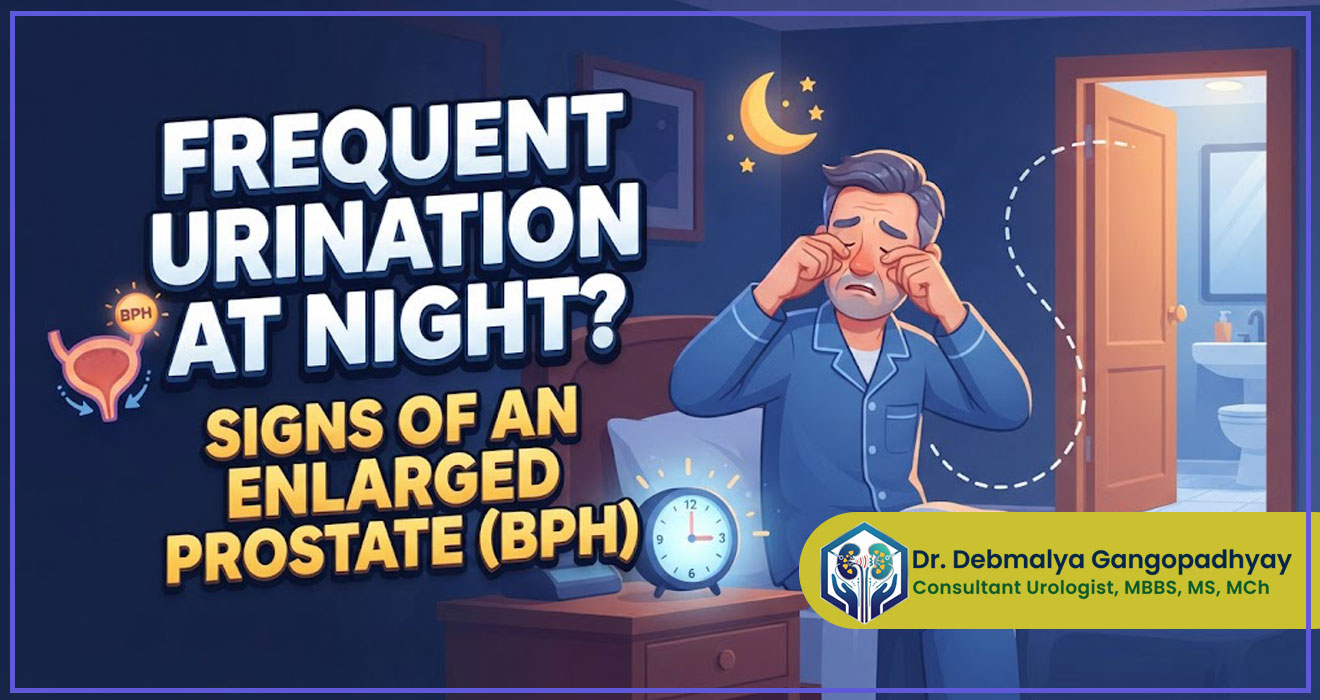
Frequent Urination at Night? Signs of an Enlarged Prostate (BPH)
Table of Contents
Toggle“Frequent Urination at Night? Signs of an Enlarged Prostate (BPH)” – an expert guidance by Dr. Debmalya Gangopadhyay, Experienced Urologist in Kolkata
Introduction
Do you often wake up two or more times at night to pass urine? Do you feel that your bladder is never completely empty, or notice a weak urine stream? While many men consider these changes a normal part of ageing, they are often early signs of an enlarged prostate, also known as Benign Prostatic Hyperplasia (BPH).
As an experienced Urologist in Kolkata, I frequently meet many patients who silently live with these symptoms for months or even years before seeking medical help. Ignoring these warning signs can affect your sleep, daily routine, and overall quality of life. The good news is that enlarged prostate is a common and treatable condition. Early diagnosis and the right treatment can provide lasting relief and help prevent complications.
Today, several advanced options are available for Enlarged Prostate Treatment Kolkata, ranging from medications and lifestyle changes to modern minimally-Invasive Surgical Treatments for Benign Prostatic Disease (BPH) in Kolkata. These minimally invasive procedures are designed to improve urinary flow, reduce discomfort, and support faster recovery with minimal disruption to your daily life.
In this blog, I will explain the common signs of an enlarged prostate, why frequent urination at night should never be ignored, how BPH is diagnosed, and the latest options for Prostate Enlargement (BPH) Treatment in Kolkata. My aim is to help you understand the condition in simple language so you can make informed decisions about your prostate health and seek treatment at the right time.
What Is an Enlarged Prostate (BPH)?
The prostate is a small gland found only in men. It is located below the bladder and surrounds the urethra, the tube that carries urine out of the body.
As men grow older, the prostate naturally becomes larger. When this enlargement is non-cancerous, it is called Benign Prostatic Hyperplasia (BPH).
As the prostate enlarges, it presses against the urethra. This narrows the passage for urine, making it difficult for the bladder to empty properly.
Although BPH is not cancer and does not increase the risk of prostate cancer, it can significantly affect daily life if left untreated.
Why Do Men Urinate Frequently at Night?
Frequent urination during the night is known as Nocturia.
One of the most common causes of nocturia in men above 50 is an enlarged prostate.
When the prostate blocks urine flow:
- The bladder cannot empty completely.
- Small amounts of urine remain inside.
- The bladder fills up faster.
- The urge to urinate occurs repeatedly, especially at night.
Many patients tell me that they wake up every one or two hours just to visit the bathroom. This interrupted sleep leads to tiredness, poor concentration, and reduced quality of life.
Common Signs of an Enlarged Prostate (BPH)
The symptoms usually develop gradually.
Some of the most common signs include:
Frequent Urination
You feel the need to urinate more often than usual during both day and night.
Night-Time Urination
Waking up multiple times at night is often one of the earliest warning signs.
Weak Urine Stream
The flow of urine becomes slow or weak.
Difficulty Starting Urination
You may have to wait before urine begins to flow.
Dribbling After Urination
Urine continues to leak even after you believe you have finished.
Feeling That the Bladder Is Not Empty
Even after urinating, you still feel the urge to pass urine again.
Sudden Urgency
A sudden, strong urge to urinate that is difficult to control.
Interrupted Urine Flow
The stream may stop and start several times while urinating.
Who Is at Risk of Developing BPH?
Several factors increase the chances of developing an enlarged prostate.
These include:
- Age above 50 years
- Family history of BPH
- Diabetes
- Obesity
- Lack of physical activity
- High blood pressure
- Hormonal changes associated with ageing
Although younger men can develop prostate enlargement, it becomes much more common after the age of 60.
When Should You Consult a Urologist?
Many men ignore urinary symptoms because they feel embarrassed.
However, you should visit an urologist if you experience:
- Frequent urination
- Night-time urination
- Blood in urine
- Burning while passing urine
- Difficulty starting urination
- Weak urine stream
- Recurrent urinary infections
- Pain while urinating
- Sudden inability to pass urine
Early evaluation helps avoid serious complications.
What Happens If BPH Is Left Untreated?
It is common for men to ignore mild BPH symptoms for years, treating them as a minor inconvenience. However, leaving a progressively enlarging prostate untreated can lead to serious medical complications over time.
When the urinary outflow remains blocked for too long, it puts heavy stress on your entire urinary system:
- Acute Urinary Retention (AUR): The prostate completely blocks the urethra, making it impossible to pass urine at all. This is a painful medical emergency that requires immediate insertion of a catheter in an emergency room to relieve bladder pressure.
- Recurrent Urinary Tract Infections (UTIs): Stagnant urine remaining in the bladder acts as a breeding ground for bacteria, leading to painful and recurring urinary infections.
- Bladder Stones: Minerals in stagnant urine can crystallize over time, forming hard bladder stones that cause severe pain, bleeding, and further blockage.
- Bladder Damage: Over years of straining, the muscle wall of the bladder stretches, weakens, and eventually loses its ability to contract effectively (a condition known as a decompensated or “atonic” bladder).
- Kidney Damage (Hydronephrosis): In severe cases, high pressure inside a full bladder backs up through the ureters into the kidneys. This backpressure can impair kidney function and cause permanent renal damage.
Recognizing symptoms early and seeking an experienced urologist for Prostatic Enlargement (BPH) Treatment in Kolkata prevents these complications and protects your long-term health.
How Is Enlarged Prostate (BPH) Diagnosed?
Proper diagnosis is essential before starting treatment.
As a Urologist in Kolkata, I usually recommend the following evaluation.
Medical History
Understanding your symptoms helps determine their severity.
Physical Examination
Including a Digital Rectal Examination (DRE) to assess the size and consistency of the prostate.
Urine Test
To rule out infection or blood in the urine.
Blood Test (PSA)
Prostate-Specific Antigen (PSA) testing helps evaluate prostate health and identify conditions that may need further investigation.
Ultrasound and Post Void Residual Urine Test
Ultrasound helps assess:
- Prostate size
- Bladder condition
- Residual urine
- Kidneys
Uroflowmetry
This measures how fast urine flows during urination.
Cystoscopy (When Required)
A small camera is inserted through the urethra to examine the urinary tract.
Is Frequent Night Urination Always Due to BPH?
No. Several other medical conditions can also cause nocturia.
These include:
- Diabetes
- Urinary tract infection
- Overactive bladder
- Kidney disease
- Heart disease
- Certain medications
- Excessive evening fluid intake
This is why proper diagnosis is important before starting treatment.
Treatment Options for Enlarged Prostate
Treatment depends on:
- Age
- Symptoms
- Prostate size
- Overall health
- Bladder function
- Patient preference
Lifestyle Changes That Can Help
Patients with mild symptoms may benefit from simple lifestyle modifications.
These include:
- Reduce tea and coffee in the evening.
- Avoid excessive water before bedtime.
- Empty the bladder before sleeping.
- Exercise regularly.
- Maintain a healthy weight.
- Avoid alcohol at night.
- Do not delay urination.
These measures may reduce symptoms but usually do not shrink the prostate.
Medicines for Enlarged Prostate
Many patients respond well to medications.
These medicines work by:
- Relaxing prostate muscles
- Improving urine flow
- Reducing prostate size
- Controlling bladder symptoms
Your urologist will decide the most suitable medicine after evaluation.
Never self-medicate.
When Is Surgery Needed?
Surgery may be recommended when:
- Medicines are ineffective.
- The prostate is significantly enlarged.
- Recurrent urinary retention occurs.
- Repeated infections develop.
- Bladder stones are present.
- Kidney function is affected.
- Symptoms severely interfere with daily life.
Modern Prostatic Enlargement (BPH) Treatment in Kolkata
Today, patients no longer have to fear major surgery in most cases.
Modern technology offers safer and faster treatment options with shorter hospital stays and quicker recovery.
As a Urologist in Kolkata, I recommend treatment based on the patient’s condition rather than using the same procedure for everyone.
Minimally-Invasive Surgical Treatments for Benign Prostatic Disease (BPH) In Kolkata
Medical technology has advanced significantly over the last decade. Many patients can now undergo minimally invasive or endoscopic procedures that avoid large external cuts.
Some commonly used options include:
TURP (Transurethral Resection of the Prostate)
Often considered the standard surgical treatment for moderate BPH, TURP removes excess prostate tissue through the urethra using a specialized instrument.
Benefits include:
- Improved urine flow
- No external incision
- Good long-term results
- Short hospital stay
Laser Prostate Surgery
Laser technology removes enlarged prostate tissue with excellent precision.
Advantages include:
- Less bleeding
- Faster recovery
- Reduced pain
- Suitable for many elderly patients and those taking blood-thinning medications, depending on individual assessment
HoLEP (Holmium Laser Enucleation of the Prostate)
HoLEP is suitable even for very large prostates.
Advantages include:
- Excellent urine flow
- Durable results
- Low recurrence rate
- Short catheterization time
Bipolar TURP
An advanced version of conventional TURP that uses bipolar energy for tissue removal.
Benefits include:
- Better safety profile
- Less bleeding
- Faster recovery
Other Advanced Endoscopic Procedures
Depending on the patient’s prostate size and overall health, other minimally invasive options may also be considered. Your urologist will recommend the most appropriate approach after a complete evaluation.
Recovery After BPH Surgery
Recovery varies depending on the treatment performed.
Most patients can expect:
- Early walking after surgery
- Short hospital stay
- Temporary burning during urination
- Gradual improvement in urine flow
- Return to routine activities within a few weeks, depending on the procedure
Your doctor will provide personalized advice on activity, hydration, medicines, and follow-up care.
Can BPH Return After Treatment?
Most modern surgical procedures provide long-lasting relief.
However:
- Regular follow-up remains important.
- Healthy lifestyle habits should continue.
- New urinary symptoms should never be ignored.
Tips to Maintain a Healthy Prostate
Although ageing cannot be prevented, healthy habits may support prostate and urinary health.
I usually advise my patients to:
- Stay physically active.
- Maintain a healthy body weight.
- Eat more fruits and vegetables.
- Limit processed and high-fat foods.
- Stay hydrated during the day.
- Reduce caffeine and alcohol intake.
- Manage diabetes and blood pressure.
- Schedule regular health check-ups after the age of 50, or earlier if there is a family history.
Why Early Diagnosis Makes a Difference
Many men believe urinary problems are simply part of getting older. While ageing increases the risk of BPH, persistent symptoms should never be ignored.
Early diagnosis offers several benefits:
- Better symptom control
- Reduced risk of complications
- More treatment options
- Less chance of emergency urinary retention
- Improved sleep and quality of life
Seeking medical advice early can often prevent the condition from becoming more severe.
Conclusion: Don’t Ignore the Signs of an Enlarged Prostate
Waking up several times at night to urinate is not something you should ignore. While it may seem like a normal part of ageing, it could be an early sign of an enlarged prostate (BPH). The earlier the condition is diagnosed, the easier it is to manage and the lower the risk of complications such as urinary retention, bladder stones, or kidney problems.
As a Urologist in Kolkata, my advice is simple: if you are experiencing frequent urination, a weak urine stream, or difficulty emptying your bladder, seek medical evaluation without delay. With timely diagnosis and the right Prostate Enlargement (BPH) Treatment in Kolkata, most patients can enjoy significant relief from their symptoms and return to a comfortable, active life.
Today, advanced Non-Invasive Surgical Treatments for Benign Prostatic Disease (BPH) In Kolkata offer safe, effective, and faster recovery options for patients who need surgical care. Every patient is unique, and the best treatment depends on the size of the prostate, the severity of symptoms, and overall health.
Early diagnosis and the right treatment plan can help you sleep better, urinate comfortably, and maintain a healthier, more active life. If you or a loved one are experiencing frequent night-time urination, weak flow, or urinary discomfort, do not hesitate to reach out for a professional evaluation with a Urologist in Kolkata.
Frequently Asked Questions (FAQs) on Enlarged Prostate (BPH)
1. Is waking up several times at night always a sign of an enlarged prostate?
Not always. Night-time urination can also occur due to diabetes, urinary infections, overactive bladder, kidney disease, certain medications, or drinking excessive fluids before bedtime. A proper evaluation by a urologist is necessary to identify the exact cause.
2. Can medicines cure BPH permanently?
Medicines can effectively relieve symptoms and improve urine flow in many patients. However, they usually do not provide a permanent cure. Some patients may eventually require surgical treatment if symptoms worsen or complications develop.
3. Is enlarged prostate the same as prostate cancer?
No. Benign Prostatic Hyperplasia (BPH) is a non-cancerous enlargement of the prostate. Although the symptoms can be similar, BPH and prostate cancer are different conditions. Proper examination and investigations help distinguish between them.
4. Are modern BPH surgeries painful?
Most modern endoscopic and laser procedures are performed under anaesthesia and involve minimal discomfort. Patients generally experience quicker recovery, less pain, and shorter hospital stays compared to traditional surgery.
5. When should I consult a Urologist in Kolkata for urinary problems?
You should seek medical advice if you have frequent urination, difficulty passing urine, a weak urine stream, repeated urinary infections, blood in the urine, or if you wake up multiple times every night to urinate. Early treatment can help prevent complications.
Disclaimer: This article is for informational purposes only and does not constitute medical advice. Always consult with a qualified cardiac specialist for diagnosis and treatment related to your personal health condition.
Read Also:
- How Much Water Should You Drink to Prevent Kidney Stones?
- Best Urologist Near Ultadanga: Expert Consultation & Advanced Treatment Guide
- The Ultimate Guide to Choosing the Best Urologist Near Me in Apollo Hospital Kolkata
- The Comprehensive Patient Guide: How to Find the Best Urologist Near Me in Salt Lake Kolkata
- Find the Best Urologist Near Sealdah: Fast Appointments & Trusted Care
- How to Find the Best Urologist Near Me in Beleghata
- Ultimate Guide to Choose Best Urologist Near Me in Newtown
- Best Urologist Near Me in Bidhannagar (Salt Lake): Consult Trusted Urology Specialist
- Why You Need a Laparoscopic Urologist in Kolkata for Kidney Care
- Understanding Modern Reconstructive Urology Treatments: Procedure, Benefits, Disadvantages, Risks and Complications, Treatment options in Kolkata
- Reconstructive Urology Specialist Doctor in Kolkata: Procedure & Area of Treatment Options
- Find the Best Urologist Near Me in Baguihati: Top Clinics & Specialist Care
- Laser Kidney Stone Surgery (RIRS/PCNL): Procedure, Benefits, Disadvantages, Risks and Complications, Treatment options in Kolkata
- The Evolution of Advanced Robotic and Laparoscopic Urology Surgery
- What the Color of Your Urine Says About Your Health: A Comprehensive Guide
- Most common urological problems in India in 2026
- A Comprehensive Guide to Blood in Urine (Hematuria): Causes, Diagnosis & Treatment in Kolkata 2026
- What is the difference between a nephrologist and a urologist
- 10 Common Urology Procedures treated by a urologist