

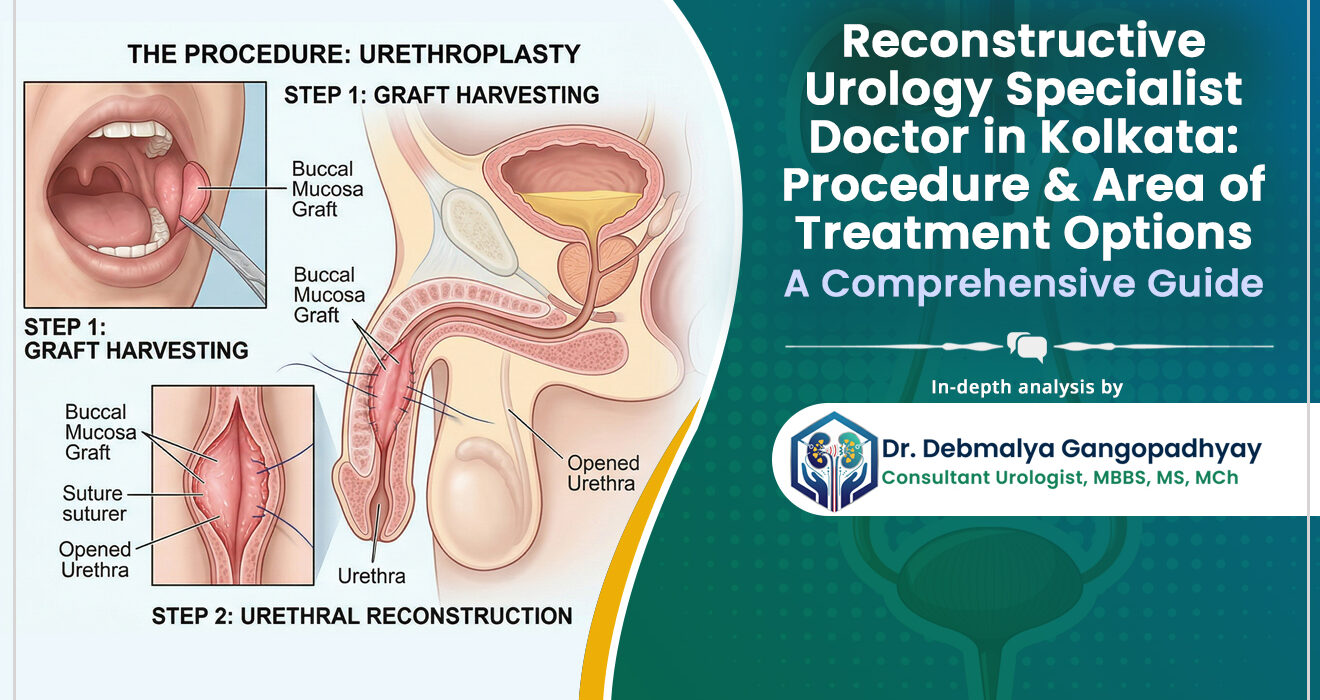
Reconstructive Urology Specialist Doctor in Kolkata: Procedure & Area of Treatment Options
Table of Contents
ToggleA Comprehensive Guide to ‘Reconstructive Urology Specialist Doctor in Kolkata: Procedure & Area of Treatment Options′ by Dr. Debmalya Gangopadhyay, Consultant Urologist in Kolkata
Living with a urological condition that affects your daily function can be both physically painful and emotionally taxing. Whether it is a persistent blockage, a recurring infection, or a congenital issue that has plagued you since birth, these are not just “medical problems”—they are barriers to a living a full, active life. This is where a Reconstructive Urology Specialist Doctor in Kolkata steps in to offer a definitive solution.
While general urology often focuses on managing diseases or removing stones, Reconstructive Urology is a surgical discipline dedicated to restoring what has been damaged, repairing what is broken, and recreating the natural flow of the body. In this detailed guide, we will explore the various procedures, treatment areas, and why consulting a premier Urologist in Kolkata, is the first step toward reclaiming your health.
What is Reconstructive Urology?
Reconstructive urology is a highly specialized sub-field that deals with the restoration of the genitourinary tract. This includes the kidneys, ureters, bladder, urethra, and male reproductive organs. The primary goal is to ensure these organs function as intended—allowing for the comfortable and efficient passage of urine and the preservation of sexual health.
Unlike many other surgical fields that focus on “resection” (removing tissue), reconstructive urologists focus on “restoration.” They are the architects of the urinary system, often using a patient’s own tissue to rebuild internal structures.
Who Needs a Reconstructive Specialist?
Patients typically seek a specialist for:
- Traumatic Injuries: Pelvic fractures or accidents that damage the bladder or urethra.
- Congenital Defects: Conditions present from birth, such as Hypospadias or UPJ Obstruction.
- Complications from Previous Surgeries: Scars (strictures) from prostate surgery, radiation, or prior urological interventions.
- Neurological Conditions: Issues like Spina Bifida or spinal cord injuries that affect bladder control.
Major Areas of Treatment in Reconstructive Urology
To understand how a specialist helps, we must look at the specific “Areas of Treatment.” Each part of the urinary tract requires a different set of skills and surgical techniques.
1. The Urethra (Lower Urinary Tract)
The urethra is the most common site for reconstruction, particularly in men. Because the male urethra is longer, it is more susceptible to Urethral Strictures—narrowing caused by scar tissue.
- Treatment Goal: To widen the passage so that urine can flow freely without straining.
- Specialist Approach: A specialist uses advanced imaging like Retrograde Urethrograms (RGU) to map the stricture before performing a definitive repair like Urethroplasty.
2. The Ureters (Upper Urinary Tract)
The ureters are the delicate tubes that carry urine from the kidneys to the bladder. If these become blocked due to stones, trauma, or congenital issues, the kidney begins to swell (Hydronephrosis).
- Treatment Goal: To remove the blockage and ensure the kidney can drain properly to prevent permanent organ damage.
- Specialist Approach: Utilizing minimally invasive robotic or laparoscopic techniques to reconstruct the kidney-ureter junction.
3. The Urinary Bladder
The bladder can be affected by “Fistulas” (abnormal connections to other organs) or may lose its capacity to hold urine comfortably.
- Treatment Goal: To close abnormal openings or “augment” the bladder to increase its size and reduce internal pressure.
- Specialist Approach: Reconstructing the bladder wall using tissue grafts to restore capacity and continence.
4. Male Genital Reconstruction
This area focuses on the penis and scrotum. Conditions like Peyronie’s Disease (causing a painful curve) or erectile dysfunction that doesn’t respond to medication fall under this category.
- Treatment Goal: To restore sexual function and correct physical deformities.
- Specialist Approach: Implantation of functional prosthetics or surgical grafting to straighten and restore the organ.
Detailed Procedure Options: How the Repair is Done
When you consult a Reconstructive Urology Specialist Doctor in Kolkata, they will recommend a procedure tailored to your specific anatomy. Here are the most common procedures performed:
Urethroplasty
This is considered the “gold standard” for treating urethral strictures. Unlike simple “dilations” which often provide only temporary relief, Urethroplasty is a long-term fix.
- Anastomotic Urethroplasty: The surgeon removes the scarred segment and sews the two healthy ends of the urethra back together.
- Substitution Urethroplasty: For longer strictures, a tissue graft—often from the inner lining of the patient’s cheek (Buccal Mucosa)—is used to create a new, wider urethral passage.
Pyeloplasty
Used to treat Ureteropelvic Junction (UPJ) Obstruction. The surgeon removes the narrowed part of the ureter where it connects to the kidney and reattaches the healthy portion. Modern approaches use laparoscopic techniques to ensure minimal scarring and a faster return to daily life.
Hypospadias Repair
This surgery corrects the position of the urethral opening, usually at the tip of the penis. In adults who have had failed childhood surgeries, this often requires complex “multi-stage” reconstruction using specialized skin grafts to ensure both functional and aesthetic success.
Artificial Urinary Sphincter (AUS)
For men with severe urinary incontinence following prostate surgery, an AUS is a life-changing device. It is a small, implanted device that gives the patient manual control over their bladder, eliminating the need for pads or diapers.
Why choose for leading Urologist in Kolkata
Choosing the right surgeon is the most critical decision in reconstructive urology. These surgeries are often “one-shot” opportunities to get it right.
Dr. Debmalya Gangopadhyay brings a unique blend of experience and innovation to the field:
- 18+ Years of Experience: He has treated some of the most complex “cripple” cases where previous surgeries have failed.
- Specialized Focus: His deep interest in Urethroplasty and reconstructive techniques has made him a sought-after expert in Eastern India.
- Minimally Invasive Focus: He utilizes robotic and laparoscopic techniques whenever possible, ensuring that “reconstruction” doesn’t have to mean a long, painful recovery.
- Holistic Care: His approach is not just about the surgery, but about the long-term psychological and functional recovery of the patient.
Common Conditions and Treatment Pathways
| Condition | Common Area affected | Recommended Procedure |
| Urethral Stricture | Urethra | Urethroplasty (Anastomotic or BMG) |
| UPJ Obstruction | Kidney/Ureter Junction | Pyeloplasty (Laparoscopic/Robotic) |
| Peyronie’s Disease | Penis | Plication or Grafting |
| Vesicovaginal Fistula | Bladder/Vagina | Fistula Repair Surgery |
| Urinary Incontinence | Bladder Neck | Artificial Urinary Sphincter (AUS) |
| Erectile Dysfunction | Penis | Penile Prosthesis/Implant |
FAQ's in reconstructive urology treatments
What is the difference between a general urologist and a reconstructive specialist?
A general urologist treats common issues like stones or infections. A reconstructive specialist has additional training and focus on complex surgical repairs meant to restore the actual structure and function of the urinary tract.
Is Urethroplasty a permanent solution for Urethral Strictures?
Yes. While dilations or "stretching" the urethra often fail within months, Urethroplasty has a long-term success rate exceeding 90% in the hands of an experienced specialist.
How long is the recovery after reconstructive urological surgery?
Most patients stay in the hospital for 2–4 days. Depending on the procedure, a temporary catheter may be needed for 2–3 weeks to allow the delicate internal repairs to heal completely.
Can a reconstructive urologist help with erectile dysfunction?
Absolutely. When medications do not work, a specialist can perform Penile Implant Surgery, which is a permanent and reliable surgical solution.
What are the signs that I might need reconstructive surgery?
Common signs include a very weak urine stream, the inability to empty the bladder, recurrent urinary tract infections, or physical deformities caused by trauma or birth.
Does Dr. Debmalya Gangopadhyay treat female reconstructive issues?
Yes, he treats women for complex conditions such as Vesicovaginal Fistulas (VVF) and advanced urinary incontinence that requires structural repair.
Is robotic surgery available for reconstructive urology in Kolkata?
Yes, advanced procedures like Pyeloplasty are frequently performed using robotic and laparoscopic methods to ensure precision and faster healing in Kolkata.
Does taking a graft from the mouth for Urethroplasty hurt?
The inner cheek (Buccal Mucosa) heals remarkably fast, usually within a few days. Patients typically experience very little long-term discomfort and no change in their appearance.
What is "Hypospadias Cripple"?
This is a term used for patients who have had multiple failed surgeries for hypospadias in the past. Reconstructive specialists like Dr. Gangopadhyay specialize in these difficult "salvage" repairs.
How do I prepare for a consultation with a Urologist in Kolkata?
Bring all previous surgical reports, current medications, and any recent imaging like X-rays or ultrasounds. Being prepared helps the specialist understand the history of your condition and provide a more accurate diagnosis.
Conclusion: Take Back Control of Your Life
Urological health is fundamental to your dignity and quality of life. You don’t have to live with the discomfort of a catheter, the frustration of a weak stream, or the pain of a recurring blockage.
As a leading Reconstructive Urology Specialist Doctor in Kolkata, Dr. Debmalya Gangopadhyay provides the technical mastery and compassionate care needed to solve even the most challenging urological problems like Non-Invasive Surgical Treatments in Kolkata. Whether you are seeking a first-time repair or a correction for a previous failed procedure, expert care is available to help you restore your body’s natural function.
Don’t wait for the condition to worsen. Expert reconstructive care is the key to a healthier, more confident future.
Disclaimer: This article is for informational purposes only and does not constitute medical advice. Always consult with a qualified cardiac specialist for diagnosis and treatment related to your personal health condition.
Read Also:
- Why You Need a Laparoscopic Urologist in Kolkata for Kidney Care
- The Evolution of Advanced Robotic and Laparoscopic Urology Surgery
- Understanding Modern Reconstructive Urology Treatments: Procedure, Benefits, Disadvantages, Risks and Complications, Treatment options in Kolkata
- Laser Kidney Stone Surgery (RIRS/PCNL): Procedure, Benefits, Disadvantages, Risks and Complications, Treatment options in Kolkata
- What the Color of Your Urine Says About Your Health: A Comprehensive Guide
- Most common urological problems in India in 2026
- A Comprehensive Guide to Blood in Urine (Hematuria): Causes, Diagnosis & Treatment in Kolkata 2026
- What is the difference between a nephrologist and a urologist
- 10 Common Urology Procedures treated by a urologist
2 Comments
Comments are closed.