What is the difference between a nephrologist and a urologist
“What is the difference between a nephrologist and a urologist” – An in-depth analysis by Dr. Debmalya Gangopadhyay, Renowned Urologist in Kolkata, India
Introduction
When you or a loved one experiences pain in the lower back, a burning sensation during urination, or an alarming change in urine color, the first instinct is to find a specialist. However, the path to recovery often begins with a fundamental question: “Do I need a nephrologist or a urologist?”
In my years of practice as a Renowned Urologist in Kolkata, I have often seen patients arrive at my clinic confused about which door to knock on. While both specialties deal with the kidneys, they are as different as a plumber and an architect. Understanding the distinction is not just about medical terminology; it is about ensuring you receive the right intervention at the right time.
From the desk of Dr. Debmalya Gangopadhyay, this guide aims to demystify the nephrologist vs. urologist debate, helping patients in Kolkata and beyond navigate their path to urinary and renal health.
Understanding the Core: Medicine vs. Surgery
The most straightforward way to look at the difference is through the lens of treatment methodology.
The Role of a Nephrologist
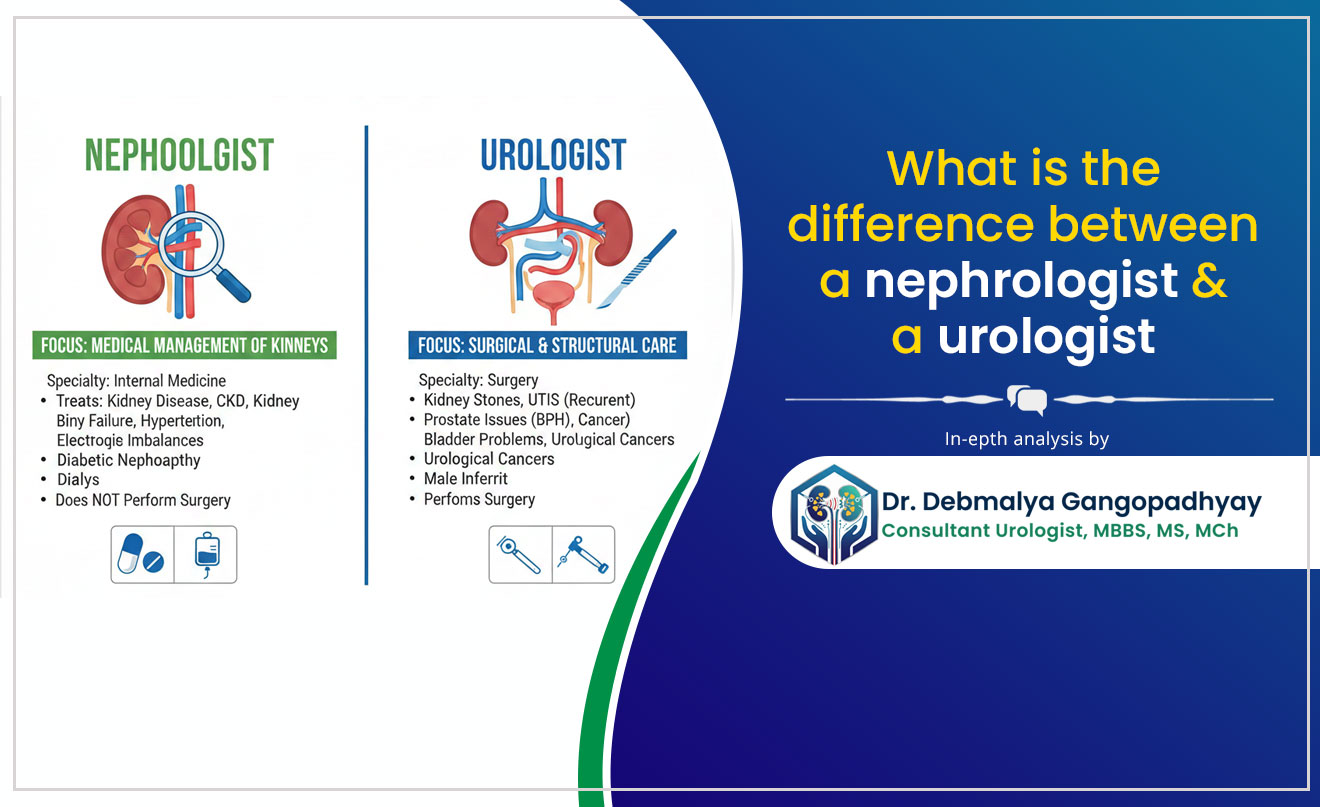
A nephrologist is a medical doctor who specializes in the internal medicine of the kidneys. Their focus is on how the kidneys function. Think of them as the experts who manage the “chemistry” of your body. They treat conditions that affect the kidney’s ability to filter blood, manage electrolytes, and regulate blood pressure. They do not perform surgery. Instead, they use medications and procedures like dialysis to manage chronic conditions.
The Role of a Urologist
As an experienced Urologist in Kolkata, my focus encompasses the surgical and structural aspects of the entire urinary tract. This includes the kidneys, ureters, bladder, and urethra, as well as the male reproductive system. If there is a physical blockage (like a stone), a growth (like a tumor), or a structural abnormality, a urologist is the specialist who intervenes, often through advanced laparoscopic or minimally invasive surgeries.
Nephrologist vs. Urologist: Breaking Down the Conditions
To help you identify which specialist you might need, let’s look at the specific conditions each one treats.
What Does a Nephrologist Treat?
Nephrologists are the primary care providers for systemic diseases that affect the kidneys over the long term. These include:
- Chronic Kidney Disease (CKD): Managing the gradual loss of kidney function over time.
- Kidney Failure: Coordinating care for end-stage renal disease, including dialysis.
- Uncontrolled Hypertension: High blood pressure that is difficult to manage and may be causing (or caused by) kidney damage.
- Electrolyte Imbalances: Issues with levels of sodium, potassium, or calcium in the blood.
- Proteinuria/Hematuria: Finding the medical cause behind protein or microscopic blood in the urine.
- Polycystic Kidney Disease (PKD): A genetic disorder causing cysts to grow in the kidneys.
What Does a Urologist Treat?
As a Renowned Urologist in Kolkata, Dr. Debmalya Gangopadhyay and my team specialize in:
- Kidney Stones: From diagnosis to surgical removal using Ureteroscopy or PCNL.
- Urinary Tract Infections (UTIs): Especially recurrent or complex infections that may involve structural issues.
- Prostate Issues: Including Benign Prostatic Hyperplasia (BPH) or Prostate Cancer.
- Bladder Problems: Such as overactive bladder, incontinence, or bladder stones.
- Urological Cancers: Tumors found in the kidneys, bladder, prostate, or testes.
- Male Infertility and Sexual Health: Including erectile dysfunction and vasectomies.
Symptom Checker: When to See Whom?
While the lines can blur, your symptoms are the best indicators of which specialist to consult first.
Consult a Nephrologist If:
- Your blood tests show high Creatinine or Urea levels.
- You have persistent swelling (edema) in your legs, ankles, or around your eyes.
- You have “foamy” urine, which often indicates protein leakage.
- You are diabetic and need to monitor your kidney health to prevent diabetic nephropathy.
- You require dialysis.
Consult a Urologist (Dr. Debmalya Gangopadhyay) If:
- You experience sharp, stabbing pain in your side or back (flank pain), often indicative of a stone.
- There is visible blood in your urine (Gross Hematuria).
- You have difficulty starting urination or a very weak urine stream (common in men with prostate issues).
- You experience leaking or an inability to control your bladder.
- You feel a lump or mass in the kidney or pelvic area.
Why Patients in Kolkata Trust Dr. Debmalya Gangopadhyay
In a bustling medical hub like Kolkata, finding a Renowned Urologist in Kolkata is essential for quality care. My practice is built on a foundation of precision, empathy, and the latest surgical technology.
Advanced Surgical Expertise
At my clinic, we prioritize minimally invasive techniques. Whether it is a complex reconstructive surgery or a routine stone removal, our goal is to ensure the fastest possible recovery for the patient with minimal discomfort.
Comprehensive Diagnostic Approach
The debate of nephrologist vs. urologist often ends in collaboration. I believe in a holistic approach. If I find that a patient’s kidney stone has caused significant functional damage, I work closely with leading nephrologists in Kolkata to ensure the patient’s renal function is preserved while I handle the structural removal of the stone.
The Intersection: When They Work Together
There are several scenarios where both specialists are required for a successful outcome. This “team approach” is often the gold standard in modern medicine.
1. Kidney Transplantation
This is the ultimate collaborative effort. The nephrologist prepares the patient medically, ensuring they are fit for the procedure and manages the anti-rejection medications afterward. The urologist, like Dr. Debmalya Gangopadhyay, performs the actual surgical transplant, connecting the donor kidney to the recipient’s blood vessels and bladder.
2. Chronic Stones and Renal Failure
If a patient has recurrent stones that have led to chronic kidney disease, they need a urologist to keep the “pipes” clear and a nephrologist to manage the “filter” health.
3. Polycystic Kidney Disease (PKD)
While a nephrologist manages the systemic effects of PKD, a urologist may be called in if a cyst becomes infected, bleeds excessively, or causes a severe blockage that requires surgical drainage.
Practical Tips for Your First Appointment
When you visit a Renowned Urologist in Kolkata, being prepared helps us give you the best care. Here is a checklist for your visit with Dr. Debmalya Gangopadhyay:
- Medical Records: Bring your latest blood reports (specifically KFT – Kidney Function Test), urine culture reports, and any imaging like Ultrasonography (USG) or CT scans.
- Medication List: Mention any medications you are currently taking, especially blood thinners or diabetes medication.
- Symptom Journal: Note down when your symptoms started, the frequency of urination, and the nature of any pain (dull vs. sharp).
Frequently Asked Questions (FAQs)
- Can a nephrologist treat a UTI?
A nephrologist can treat a simple UTI, but if the infection is recurring or caused by a structural issue like a stone or an enlarged prostate, they will refer you to a urologist. - Who should I see for kidney cancer?
A urologist is the primary surgeon for kidney cancer. We perform surgeries like radical or partial nephrectomies to remove the tumor. An oncologist may also be involved if chemotherapy or radiation is needed. - Does Dr. Debmalya Gangopadhyay treat female patients?
Yes. Urology is often mistakenly thought of as a “men’s only” field. However, urologists treat women for kidney stones, UTIs, bladder issues, and urinary incontinence.
Conclusion: Taking the Right Step for Your Health
Navigating the complexities of the nephrologist vs. urologist distinction can feel overwhelming when you are in pain. However, remember that the goal of both specialists is the same: to keep your kidneys healthy and your body functioning at its best.
If your issue involves “how it works,” start with a nephrologist. If it involves “how it’s built” or if there’s a physical obstruction, you need a urologist. As a Renowned Urologist in Kolkata, Dr. Debmalya Gangopadhyay is committed to providing the highest standard of urological care, ensuring that every patient receives a clear diagnosis and an effective treatment plan.
Don’t ignore the warning signs. Whether it’s a nagging pain or a change in your bathroom habits, early intervention is the key to preserving your kidney health.
Disclaimer: This article is for informational purposes only and does not constitute medical advice. Always consult with a qualified cardiac specialist for diagnosis and treatment related to your personal health condition.
Read Also: