

Uro-Oncology Management: Comprehensive Cancer Care In Kolkata, India
Uro-Oncology is a specialized branch of urology focused on the diagnosis, treatment, and management of cancers affecting the male and female urinary tract and the male reproductive organs. These malignancies include cancers of the prostate, bladder, kidney, testicles, and penis. Our approach combines cutting-edge surgical expertise, advanced diagnostic tools, and personalized treatment plans to offer patients the best possible outcomes and quality of life.
Prostate Cancer Treatment
Prostate cancer is one of the most common cancers in men. Treatment plans are highly individualized, factoring in the cancer’s aggressiveness (Gleason score), stage, the patient’s age, overall health, and personal preferences.
- Active Surveillance:For very low-risk cancers, we may recommend close monitoring with regular PSA tests, prostate exams, and sometimes repeat biopsies, delaying or avoiding unnecessary aggressive treatment.
- Radical Prostatectomy:This is the surgical removal of the entire prostate gland and seminal vesicles. We specialize in robotic-assisted laparoscopic radical prostatectomy, which offers greater surgical precision, especially for continence, and faster recovery.
- Radiation Therapy:High-energy rays are used to kill cancer cells, delivered externally (External Beam Radiation Therapy or EBRT) or internally via seeds (Brachytherapy).
- Hormone Therapy:Used to block the production or action of androgens (male hormones) that fuel prostate cancer growth, often used for advanced or recurrent disease.
Bladder Cancer Treatment
Bladder cancer treatment depends primarily on whether the cancer is non-muscle-invasive (NMIBC) or muscle-invasive (MIBC).
- Transurethral Resection of Bladder Tumor (TURBT):This is the initial procedure for almost all bladder cancers. A telescope is inserted through the urethra to remove the visible tumor. It is completely pain free as no incision or cut is made on the skin or body surface in this procedure. For NMIBC, this may be curative.
- Intravesical Therapy:After TURBT for NMIBC, medications (like BCG or chemotherapy agents) are placed directly into the bladder to reduce the risk of recurrence or progression to higher stages.
- Radical Cystectomy:For MIBC, this is the gold standard treatment, involving the removal of the entire bladder (and prostate/seminal vesicles in men, or uterus/part of the vagina in women). This is followed by a procedure to create a new way for urine to exit the body (Urinary Diversion), such as an Ileal Conduit or a Neobladder. We perform robotic-assisted radical cystectomy and complex diversion procedures.
Kidney Cancer Treatment
Treatment for kidney cancer (Renal Cell Carcinoma or RCC) is almost always surgical.
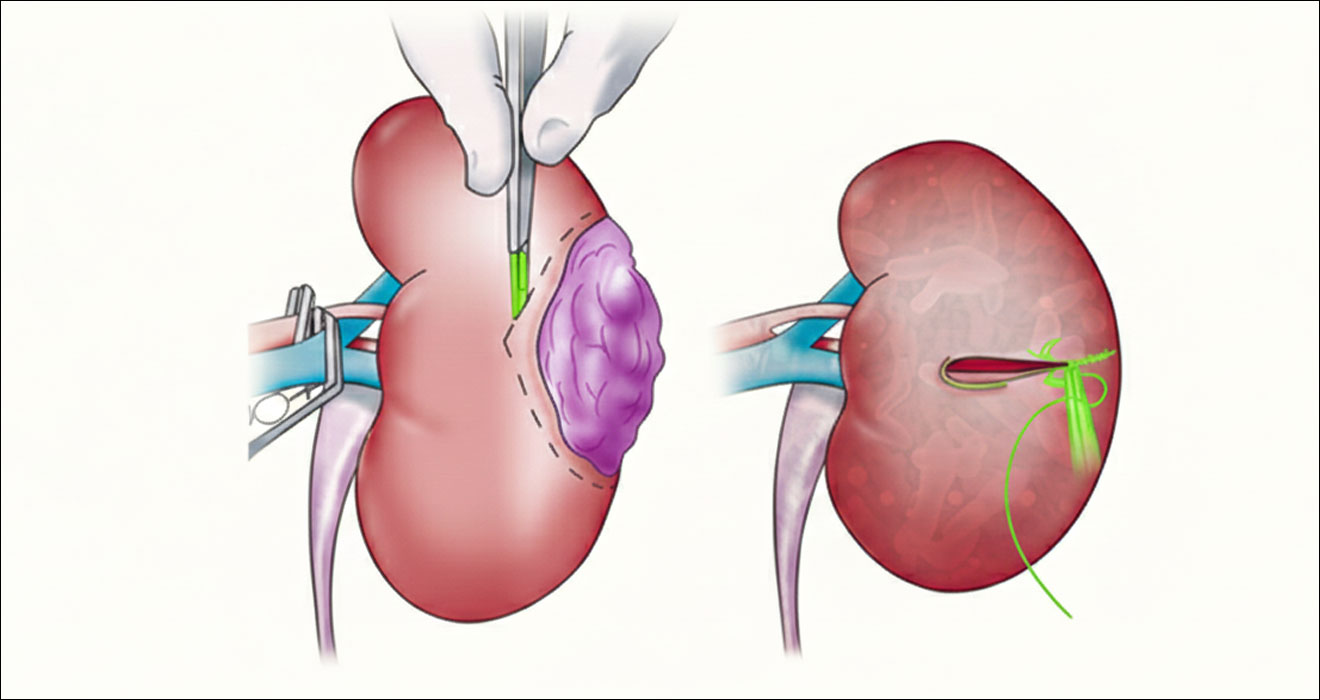
- Partial Nephrectomy (Kidney Sparing Surgery):For smaller tumors, only the tumor and a rim of healthy tissue are removed, preserving the rest of the kidney’s function. We specialize in robotic partial nephrectomy, which allows for a highly precise and quick removal of the tumor, crucial for those who have restricted renal functions.
- Radical Nephrectomy:The complete removal of the affected kidney. This is typically reserved for large, centrally located, or locally advanced tumors.
- IVC Thrombectomy:For those advanced kidney cancers where the tumour itself extends inside the main vein of the abdomen, the whole diseased kidney along with the disease extension can be removed from the main vein of the abdomen.
Testicular Cancer Treatment
Testicular cancer is highly curable, especially when detected early.
- Radical Inguinal Orchiectomy:The primary treatment is the surgical removal of the cancerous testicle through an incision in the groin. This is done for both diagnosis and initial treatment.
- Adjuvant Therapy (Surveillance, Chemotherapy, or Radiation):Depending on the pathology and stage after orchiectomy, patients may undergo active surveillance (close monitoring), chemotherapy, or retroperitoneal lymph node dissection (RPLND). RPLND is a complex procedure to remove potentially cancerous lymph nodes in the abdomen, often performed robotically or laparoscopically or by open technique
Penile Cancer Treatment
The management of penile cancer focuses on effective cancer control while preserving as much penile function and appearance as possible.
- Local Excision/Organ-Sparing Surgery:For small, superficial lesions, surgical excision, laser ablation, or Mohs micrographic surgery may be used to remove the cancer while preserving the shaft and glans.
- Partial or Total Penectomy:Removal of a portion or the entire penis is necessary for larger, more invasive cancers to achieve clear surgical margins.
Inguinal lymph node dissection: management of the lymph nodes in the groin is crucial, as the spread to these nodes is the most significant prognostic factor. This can range from dynamic sentinel lymph node biopsy to modified or radical inguinal lymphadenectomy.
Lympadenectomy
Removal of all Lymph nodes containing the drainage area of the cancer involved organ
Pelvic and Retroperitoneal Lymphadenectomy procedure involves the careful removal of lymph nodes located in the pelvis and retroperitoneum (back end of the abdomen). These nodes are the primary drainage sites for cancer cells originating in the urinary system organs. The reasons for performing PLND are two-fold:
- Staging:Examination of the removed lymph nodes under a microscope helps determine if the cancer has spread outside the original organ (metastasis). This is crucial for accurate cancer staging, which directly guides subsequent treatment decisions (e.g., whether to use chemotherapy or radiation).
- Therapeutic:Removing lymph nodes containing cancer cells can sometimes eliminate microscopic disease and improve long-term survival rates for patients with certain types of cancers.
We utilize both open and minimally invasive techniques (laparoscopic and robotic) for PLND, ensuring precise, thorough dissection and minimizing patient recovery time.
Meet Your Urologist in Kolkata:
Dr. Debmalya Gangopadhyay
SPECIALIST DOCTOR FOR URO-ONCOLOGY MANAGEMENT IN KOLKATA, INDIA
When it comes to battling cancers of the urinary system, precision and timely intervention are paramount. Dr. Debmalya Gangopadhyay provides world-class Uro-Oncology Management in Kolkata, specializing in the surgical treatment of prostate, kidney, bladder, and testicular cancers. Utilizing advanced laparoscopic and robotic-assisted techniques, he ensures maximum tumor removal while preserving as much healthy tissue and function as possible. For patients seeking a dedicated expert to lead their journey through cancer recovery with compassionate and comprehensive care, you can book an appointment with Dr. Debmalya Gangopadhyay by calling 09051068004 or visiting his clinic for a detailed evaluation.